How Voice Agents Are Transforming Electric Vehicle Businesses
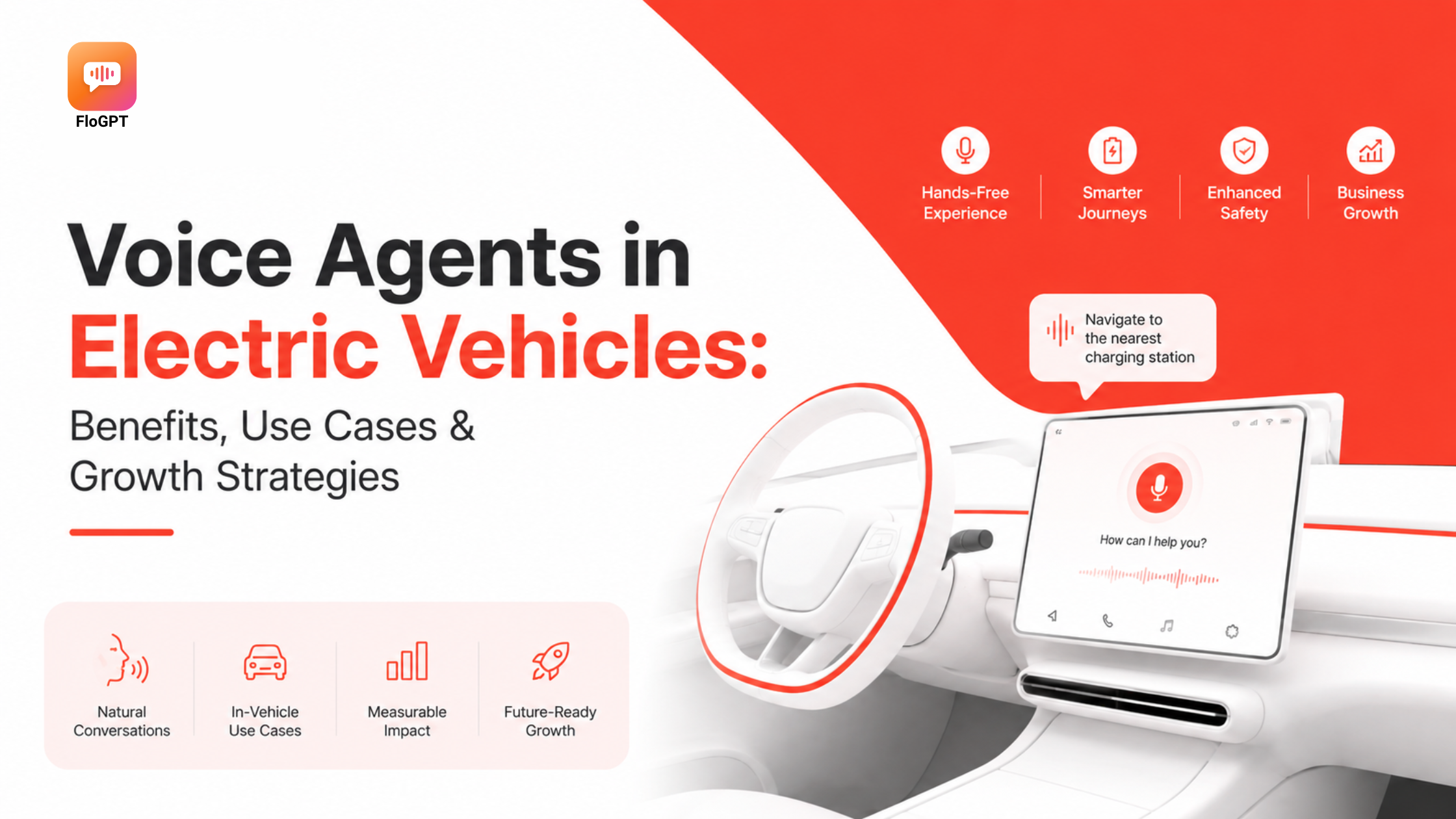
Discover how voice agents in electric vehicles improve customer support, automate operations, boost lead conversions, and help EV businesses scale efficiently.
The electric vehicle (EV) market is taking the world by storm. More car companies than ever before are joining the market, more dealerships are investing more heavily in EV stock and more charging providers are rushing to fulfill demand.
With all of this change and expansion, there are new challenges arising for EV companies. It is now crucial to ensure that customers receive instant responses, can get in touch easily at their convenience, and benefit from seamless buying and ownership processes, without ballooning costs through overstretching internal teams to handle higher customer numbers.
That’s where voice agents are helping to revolutionize the customer experience in the EV sector. Utilising artificial intelligence to answer questions, process orders and respond to customer enquiries at any time of day, EV providers can use voice agents to transform customer service and accelerate their company growth and efficiency.
Challenges Faced by EV Businesses Today

EV Companies’ Unique Hurdles You’ll Not Find at Classic Auto Brands EVs bring their own special blend of issues you’d normally never hear of at a traditional automotive brand.
Here’s some:
- Educating the Market: The majority of people are not familiar with anything about EV vehicles, their performance, incentives, battery range, maintenance, etc. You have many questions that need to be immediately answered.
- High volumes of customer calls and inquires
- Missed leads and missed calls after business hours
- Bottlenecks in booking service appointments
- Communication across different channels
- Monitoring post-sales engagement
- Increasing customer acquisition cost
- Scaling without hiring more support people
While customer satisfaction might appear high at the EV sector, eventually, using solely customer service representatives will become too complex and costly for these companies as they grow.
What Are Voice Agents in Electric Vehicles?
Voice agents: 10 examples for the EV Industry What are they? It's the term used for AI-driven customer service robots or voiceBots, that will talk with the customer and provide answers in natural, conversational language.
It’s unlike the typical automated customer service number which has predefined menu options. Voice bots comprehend context, answer questions, and will take part in a conversation.
They can be part of customer support, e- commerce service, customer engagement and many other customer focused areas. They offer the benefit of having customers express concerns or make demands in their own words which is something which will make communication feel natural.
In the EV (Electric Vehicles) Industry, voice agents are capable of assisting the customer all the way throughout the client’s journey; it will start from inquiries, selecting a new car, taking an appointment for services and many others that can be part of car ownership.
EV Industry use cases for voice agents:
EV dealers and service providers can use voice agents to address queries related to charging stations, battery capabilities and other battery specific questions.
They can help potential clients to make inquiries about car models and how financing will impact their purchasing decision.
Voice agents will make it easy for customers to check car parts or book service appointments.
Information regarding warranties, financing, service intervals, or any other aspect of ownership can easily be disseminated by a voice agent.
The outcome is enhanced customer communication speeds, higher levels of customer satisfaction, and efficient operations.
How Do Voice Agents Work in Electric Vehicles?
This form of AI leverages a mix of complex technologies to process customer demands.
The steps for a typical customer query are outlined below:
- A customer places a voice call. Speech recognition turns the customers’ voice into text.
- Natural Language Processing (NLP) interprets the customers intent. AI programs generate the ideal response.
- Text to speech technology plays out the natural response to the consumer. This form of technology is able to query corporate databases, CRM systems, service tickets, and even stock inventory to assist them.
An example of a query where this would be beneficial to a consumer is regarding charging appointment slots for instance. The business can answer it instantly instead of the consumer having to hold back.
What Are the Key Features of Voice Agents for Electric Vehicles?
A customer facing system designed to handle everything including:
Natural Language Understanding: Understand customers as they speak in everyday language. No more rigid commands and failed intents.
24/7 Coverage: Never make customers wait by using our system when your agents can't be reached-at night, over the weekend, or even when they're on vacation.
Multilingual Options: Cater to customers worldwide or to a diverse customer base at home.
Schedule Appointments: Seamlessly book, reschedule and confirm appointments.
Qualify Leads: Filter prospects based on their needs and readiness to purchase then guide them through your funnel.
CRM Integrated: Log all customer communications and insights into your CRM.
Personalize Offers: Use the customer’s history to deliver tailored solutions and upsell recommendations.
What Benefits Do Voice Agents Bring to Electric Vehicles?
Advantages of voice agents aren’t limited to a specific department – in fact, you’ll find perks of using agents that span across sales, customer service, and even operations.
Some of the benefits you can get from having agents in your team include:
Quicker responses
Your customers can get an answer right away instead of having to wait in line for long periods.
Higher lead conversion rate
The speed at which leads are converted and dealt with increases and reduces chances of potential leads going away.
Increased customer satisfaction
Having support at any time can make the customer feel more heard and valued.
Decreased operational costs
An agent allows your team to handle a significant number of interactions without needing to significantly increase your headcount.
Enhanced employee productivity
Instead of team members being tied up with answering the same basic questions, they can now focus their time on more important and complex interactions and issues.
Better data collecting
All interactions recorded by an agent contribute valuable information towards learning customer behaviors and trends.
What Are the Practical Use Cases of Voice Agents in Electric Vehicles?
There are dozens of tasks across EV businesses where voice agents can assist.
Here are some of the more common tasks where voice assistants are employed:
- Answering questions about electric vehicles
- Scheduling a vehicle test drive
- Share charging station details
- Making a service appointment
- Scheduling maintenance
- Send service reminders
- Follow up with sales leads
- Take warranty inquiries
- Perform customer satisfaction surveys
- Roadside assistance requests
- Handle customer’s post-purchase engagement
What Challenges in Electric Vehicles Can Voice Agents Solve?
The voice agent addresses a variety of pain points across the EV landscape. They can improve by mitigating:
- Lost sales opportunity
- Increased waiting time
- Manual booking workload
- Inconsistent communication service center delays Increased customer dissatisfaction due to lack of immediate response
Voice agents can automatically respond to all of these and more, releasing the team to deal with more complex interactions.
Why Are Voice Agents Better Than Traditional Automation in Electric Vehicles?
There’s no-doubt that customers have been let down and even frustrated by most traditional automated systems in the past with its menus of selections and canned responses.
Voice agents are different…
- Instead of making customers tap through a range of numbers or options, a voice agent understand the nuance of the human voice and conversational language and responds on context. Benefits of the new voice agent approach versus that of a typical automation include:
- A More natural interaction with customers.
- Customers’ intent is understood and addressed.
- Conversations are personal.
- Responses are dynamic.
- Increased customer satisfaction and experience.
- Highly versatile and can accommodate various use cases.
Rather than a machine-like experience, it now feels like conversing with an intelligent, well-informed, service-oriented individual.
How Can Businesses in Electric Vehicles Implement Voice Agents Effectively?
First things first: determine clear business objectives. For EV brands, determine high-frequency customer engagement that takes up the most agent time.
Here’s a rundown of best practices:
- Map your customer journeys
- Highlight redundant tasks that would benefit from automation
- Connect your voice agents to your systems
- Train AI models with domain expertise
- Frequently measure KPIs
- Ensure smooth transitions for human escalation
How Do Voice Agents Integrate with CRM, ERP, and Other Tools in Electric Vehicles?
In the voice agent of the present time, Integration is probably its most important aspect.
With Voice agent integrations can be directly connected to:
- CRM software
- ERP software
- Service management software
- Inventory databases
- Customer support software
- Marketing automation tools
- Billing software
Because of such connections, the customer receives true, precise and personalized information from real-time data.
For instance, a client may inquire on his next scheduled service and with service management’s data, he will have the exact live update on the job status.
What Are Some Real-World Examples of Voice Agents in Electric Vehicles?
Several EV businesses are already implementing voice-powered AI:
EV Dealerships
Voice agents can be trained to lead customer calls, help schedule test drives, and provide quick answers to common questions about vehicle features and pricing.
Charging Network Operators
This allows customers to easily inquire about the availability and location of charging stations, and to understand associated costs.
Fleet Operators
Voice assistants help fleet managers and their drivers access useful information for routes, schedules, maintenance needs, and more.
Service Centers
Customers can use their voice to book or reschedule service appointments, and to get reminders.
As can be seen from these few examples, AI voice solutions are not science fiction anymore; they are practical tools for business today.
What Does the Future Hold for Voice Agents in Electric Vehicles?
In the future, these voice agents will continue to get smarter and more proactive. This includes capabilities like:
- Predictive maintenance alerts
- Hyper-personalized customer assistance
- Vehicle real-time diagnostics
- More sophisticated multi-lingual conversations
- Integration of deeper in-car experiences proactive charging tips
As artificial intelligence evolves, we will see these voice agents permeate every aspect of the EV life cycle.
How Do Customers in Electric Vehicles Respond to Voice Agents?
Things look different today. Today's consumers are largely looking for ease of use and quick, responsive assistance.
When voice agents answer correctly promptly, consumers will react favourably. The results of that favourable reaction include:
- Faster resolutions Quicker response times
- Greater convenience
- Better customer satisfaction
Better perception of brand Ideally, however, conversations with voice agents will feel more human than machine.
What Are the Common Mistakes to Avoid When Deploying Voice Agents in Electric Vehicles?
However, if not executed well, these voice agents can be a real nuisance
5 Common voice agent mistakes
Over-automation
Not every customer inquiry or problem should be solved by the AI, as this frustrates customers…
Missing a human escalation
When there is an issue the agent can’t resolve, there should always be an option for the customer to reach a human contact person.
Misconfiguration
If the systems that the AI is connecting to aren’t properly configured and integrated, it may cause incorrect answers.
Under training
For a voice agent to be successful it needs to know about your industry.
Ignoring customer feedback
If you’re not acting on feedback, it’s hard to improve, customer experience, as well as, efficiency.
By staying clear from these problems, you will achieve happy customers, as well as positive results for the business.
How Do Voice Agents Improve Customer Experience in Electric Vehicles?
In many markets with tight competition, it's customer experience that will win the day. Voice agents can enhance this with:
- Immediate help
- Uniform information
- Tailored support
- Quick scheduling options
- Self-service ease
- Availability any time
This smooths a customer journey from initial inquiry to enduring relationship.
What Compliance and Security Measures Do Voice Agents in Electric Vehicles Require?
Protect data Since the voice agents can access customer information it makes the security very imperative. The crucial points to look for are:
- Data encryption
- Secure API connections
- Role-based access control
- Adherence to privacy laws
- Customer consent
- Logging and auditing
For businesses, the security of customer data needs to be considered at every stage.
How Do Voice Agents Contribute to Cost Savings and ROI in Electric Vehicles?
What is a voice agent?
A voice agent is often introduced as a strategy to impact the bottom line. Why businesses are implementing voice agents Financial Impact.
This is often the number one reason why businesses turn to voice agents to solve problems like:
- Reducing the need for support staff
- Automating mundane, repetitive tasks
- Minimizing lost sales and missed customer opportunities (e.g., customers not finishing orders)
- Higher quality lead conversion rate
- Gaining operational efficiency
More customer retention Often, businesses see a healthy return on investment in addition to delivering a better customer experience.
How FloGPT Transforms EV Operations
At the electric vehicle business, one thing that matters more than individual tools is creating an engaged customer journey: from lead capture and nurture to sales and customer loyalty.
This requires an ecosystem of tools rather than just a couple isolated instruments. It helps establish that kind of connectivity.
One Pipeline, From Ad Click to Repeat Customer

LAYER 01: Ad Leads Take a more proactive approach to ad lead capture and qualification with FloGPT and connect with and engage leads generated from Meta & Google automatically.
Instead of leaving your potential customers hanging while waiting to hear back, FloGPT can immediately engage with and qualify those leads and guide them to the next step of their journey.
LAYER 02: Website Queries Businesses need to respond quickly to website visitors before they click away to a competitor. Providing them with the answers to urgent questions through website chat and direct conversation through Whatsapp support will make it quick and easy to schedule appointments or set up consults.
LAYER 03: CRM, Post-Sale & Service Creating lasting relationships does not end with a single transaction. FloGPT powers customer follow ups such as service bookings, appointment reminders, ticket management, call history, post-purchase check ins and retargeting campaigns, creating an ideal continuous customer journey.
Conclusion
As technology develops and consumer expectations continue to increase, companies need efficient ways to provide the quick, personal responses that EV customers expect, while not having agents on staff that only handle these responses.
For most EV businesses, Voice agents are the best solution. By automating everyday tasks, enhancing customer service and efficiency, they are a must-have to continue with your growth at scale.
Frequently Asked Questions
What are Voice Agents in Electric Vehicles?
Voice agents are AI-powered technologies designed to engage customers in natural conversations. They help answer questions, book appointments, qualify prospects, and provide customer service throughout the EV journey.
How do Voice Agents in Electric Vehicles work?
How do these voice agents work? To answer your queries they combine speech recognition (transcribe words into text), natural language processing (understand language) and AI based response generation ( create intelligent and relevant responses in natural language).
What are the benefits of using Voice Agents in Electric Vehicles?
The main advantages are: Faster response times, better customer experience, reduced cost of operations, higher lead conversion rates, 24/7 availability of customer support, operational excellence and many more.